The Korean Age Reform: Decoding South Korea's Transition to International Chronological Standards
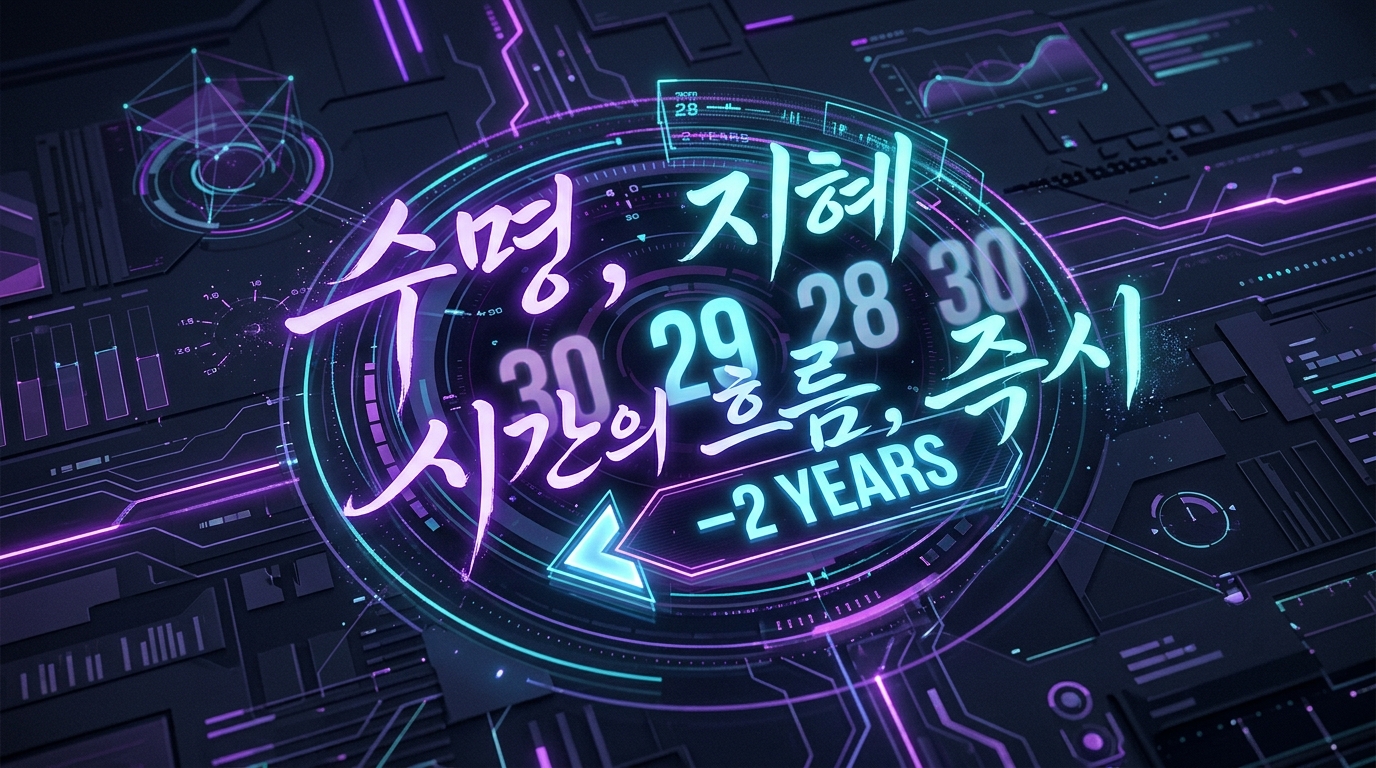
The Korean Age Reform: Decoding South Korea's Transition to International Chronological Standards
In June 2023, a highly unusual, globally fascinating phenomenon occurred across the Korean Peninsula: overnight, over 51 million people living in South Korea legally became one to two years younger. This temporal reset was not the result of a science-fictional warp in the space-time continuum, nor did it stem from a sudden, massive breakthrough in biogerontology. Instead, it was the consequence of a sweeping legislative overhaul passed by the South Korean National Assembly to dismantle one of the world's most unique, complex, and culturally deeply entrenched methods of counting human life: the traditional Korean Age System.
For centuries, South Korea operated under three distinct, concurrent, and often highly contradictory systems for calculating an individual's age. This tripartite framework created administrative chaos, legal disputes, medical vulnerabilities, and cognitive dissonance in an increasingly globalized world. When the administration of President Yoon Suk-yeol officially abolished the traditional system for civil and administrative purposes, it marked a historic shift—aligning South Korea with the international standard of chronological age.
This comprehensive treatise explores the mathematics, history, sociology, and legal structures of the Korean age reform. We unpack the formulas of the coexisting systems, explore the ancient East Asian cultural roots of nominal age reckoning, examine the legislative mechanisms of the 2023 reform, analyze the economic and healthcare friction that catalyzed the change, and investigate how South Korea's deeply age-hierarchical social fabric is adapting to a standardized, universal chronological clock.
"Time is a created thing. To say 'I don't have time,' is like saying, 'I don't want to.'" > — Lao Tzu
Section I: Understanding the Three Coexisting Korean Age Systems
To comprehend the monumental nature of the 2023 reform, one must first understand the mind-boggling complexity of the age-counting landscape that preceded it. Until June 2023, a typical South Korean citizen did not have a single, definitive answer to the simple question: "How old are you?" Depending on whether they were signing a legal contract, buying a drink, enrolling in school, or talking to a classmate, their age could vary by up to two years.
Let us dissect the three coexisting systems that governed South Korean life for decades:
1. Se-neun Na-i (Nominal Age / "Counting Age") Commonly referred to internationally as the Traditional Korean Age, Se-neun Na-i (literally meaning "counting age") is the most culturally dominant system. Under this model: * A baby is considered one year old on the exact day of their birth. * Instead of gaining a year on their actual birthday, everyone collectively gains a year on New Year's Day (January 1st).
This leads to the famous chronological paradox: a baby born on December 31st is considered one year old at birth. Just one day later, on January 1st, New Year's Day arrives, and the infant is immediately considered two years old, despite having lived for a cumulative total of only 24 to 48 hours!
2. Yeol-lyeong (Year Age) The second system, Yeol-lyeong (literally meaning "year age"), is a hybrid, semi-systematic method used primarily in specific regulatory, legislative, and administrative statutes. Under this model: * A person is considered zero years old at birth. * Everyone collectively gains one year on New Year's Day (January 1st), regardless of their actual birthday.
This system is used as a compromise to simplify administrative enforcement for laws governing age-restricted activities, such as military conscription, school eligibility, and the legal purchasing age of alcohol and tobacco.
3. Man-na-i (International Standard / "Actual Age") The third system, Man-na-i (literally meaning "full age"), is the International Chronological Standard used by almost every other country in the modern world. Under this model: * A person is considered zero years old at birth. * The individual gains exactly one year on the anniversary of their birth (actual birthday).
While South Korea officially adopted Man-na-i for legal documents and medical records in 1962, the traditional Se-neun Na-i remained the unchallenged standard in daily social interactions, colloquial speech, and corporate hierarchy, while Yeol-lyeong was retained for specific administrative laws.
Section II: The Mathematical and Algorithmic Formulas of East Asian Age Counting
To understand the operational mechanics of these three systems, we can formalize them as mathematical functions. Let us define: * $T_{current}$ = The current calendar year (e.g., 2026). * $T_{birth}$ = The individual's birth calendar year (e.g., 1996). * $M_{current}$ = The current calendar month (1 to 12). * $M_{birth}$ = The individual's birth calendar month (1 to 12). * $D_{current}$ = The current day of the month. * $D_{birth}$ = The individual's birth day of the month.
Using these variables, we can formulate the exact mathematical definitions for each age system:
1. Traditional Korean Age (Se-neun Na-i) Formula The calculation for Se-neun Na-i is entirely independent of the individual's birth month or birth day. It is determined solely by the calendar year difference:
$$Age_{\text{Nominal}} = (T_{current} - T_{birth}) + 1$$
Example: If a person is born in November 1996, and the current year is 2026, their nominal age is: $$Age_{\text{Nominal}} = (2026 - 1996) + 1 = 31 \text{ years old}$$
2. Year Age (Yeol-lyeong) Formula The calculation for Yeol-lyeong represents the standard calendar year difference, ignoring the birthday milestone:
$$Age_{\text{Year}} = T_{current} - T_{birth}$$
Example: For the same person born in November 1996, in any month of 2026, their year age is: $$Age_{\text{Year}} = 2026 - 1996 = 30 \text{ years old}$$
3. International Chronological Age (Man-na-i) Formula The calculation for the international standard Man-na-i is highly dependent on whether the birthday has passed in the current calendar year:
$$\text{If } (M_{current} > M_{birth}) \text{ or } (M_{current} = M_{birth} \text{ and } D_{current} ge D_{birth}):$$ $$Age_{\text{Chronological}} = T_{current} - T_{birth}$$
$$\text{If } (M_{current} < M_{birth}) \text{ or } (M_{current} = M_{birth} \text{ and } D_{current} < D_{birth}):$$ $$Age_{\text{Chronological}} = (T_{current} - T_{birth}) - 1$$
Example: For the person born on November 15, 1996: * On July 14, 2026 (since July is before November): $$Age_{\text{Chronological}} = (2026 - 1996) - 1 = 29 \text{ years old}$$ * On November 15, 2026 (once their birthday is reached): $$Age_{\text{Chronological}} = 2026 - 1996 = 30 \text{ years old}$$
This mathematical analysis highlights the profound divergence: on July 14, 2026, the exact same individual is simultaneously 31 years old under the traditional system, 30 years old under the Year Age system, and 29 years old under the International Chronological standard!
Section III: The Historical and Cultural Origins of the Counting Age System
The traditional counting age system did not emerge in a vacuum. It is deeply rooted in the ancient cultural, philosophical, and astrological traditions of East Asia. Historically, this system was utilized not only in Korea, but also across China, Japan, Vietnam, and Mongolia.
To fully understand the Se-neun Na-i system, we must examine its three core historical foundations:
1. The Astrological and Lunar Calibration In ancient East Asia, time was calculated using the sexagenary cycle—a system of 60 combinations of the 10 Heavenly Stems and the 12 Earthly Branches. Rather than measuring age as a fluid, continuous linear progression of individual birth dates, communities measured life collectively through the lens of agricultural seasons and agricultural years. Every New Year’s Day represented a cosmic renewal, a collective transition where the entire community advanced together into the next year of the sexagenary cycle.
2. The Conception Period Integration One of the most beautiful, culturally pervasive explanations for the traditional "one year old at birth" rule is the recognition of the time spent in the mother's womb. Traditional East Asian culture held a profound respect for fetal life, considering the period of gestation as the true beginning of human existence. Because a standard human pregnancy lasts approximately 266 to 280 days (roughly 9 to 10 lunar months), the system rounded this conception period up to a full year. Therefore, on the day a baby was born, they were already credited with their first year of life, representing the biological duration of their development in the womb.
3. The Absence of the Mathematical Concept of "Zero" Ancient East Asian mathematics, while highly advanced, did not historically utilize the concept of "zero" in daily counting or accounting registers. When counting physical items—whether bags of rice, cattle, or years of life—one always began with the number "one." Measuring age is essentially counting the number of calendar years in which a person has experienced life. Consequently, a newborn baby is living in their very first year of life; hence, their nominal age is "one." Measuring age in completed, elapsed years (beginning at zero) is a relatively modern mathematical convention heavily influenced by Western scientific traditions.
Section IV: The Legislative Catalyst: Why South Korea Officially Abolished Traditional Age Laws
If this system was so deeply rooted in centuries of cultural history, what prompted the South Korean government to undertake the massive task of legally and administratively abolishing it?
The drive for reform was championed by President Yoon Suk-yeol during his 2022 presidential campaign. Yoon argued that the country's coexisting age systems generated unnecessary "social and economic costs," fueled endless administrative confusion, and dragged down South Korea’s national competitiveness in an interconnected global marketplace.
In December 2022, the South Korean National Assembly passed landmark amendments to the Civil Act and the National Government Organization Act. These amendments mandated that: * Starting June 28, 2023, all civil and administrative matters—including contracts, official documents, government applications, and public services—must calculate age exclusively using the international standard (Man-na-i). * Age calculation must begin at zero at birth, and increase by one year on each subsequent birthday. * Unless a specific law explicitly states otherwise, any references to "age" in all administrative and judicial contexts must be interpreted as chronological standard age.
The primary goal of this legislation was to establish a clear, standardized legal baseline, eliminating the ambiguity that had plagued South Korean administration for generations.
Section V: The Economic, Social, and Administrative Friction of Multiple Age Standards
The coexistence of three divergent age systems was not merely a quirky cultural trivia; it was a source of massive economic waste, legal battles, and life-threatening administrative risks. Let us examine the three major domains where this temporal friction caused severe damage:
1. Legal and Corporate Labor Disputes One of the most prominent economic battlegrounds occurred in the corporate world over the Wage Peak System. Introduced to alleviate the financial burden on companies as the workforce aged, the system gradually reduces the salaries of senior employees a few years before their official retirement.
However, many collective bargaining agreements between labor unions and corporate managements simply specified that the wage peak system would trigger at "age 55." Because the contracts did not explicitly clarify whether "age 55" referred to Se-neun Na-i (nominal age) or Man-na-i (international chronological age), it triggered years of high-stakes litigation, culminating in a landmark South Korean Supreme Court case. The court ruled that unless specified, "age 55" must legally mean international age, but the ambiguity cost corporations and labor unions millions of dollars in legal fees and severely disrupted industrial relations.
2. Clinical and Pharmaceutical Vulnerabilities In healthcare, age calculation is a matter of life and death. Many pediatric medications, vaccinations, and diagnostic guidelines are formulated with extreme precision based on the patient's exact developmental milestones in months or years.
However, many parents, accustomed to using traditional Se-neun Na-i in their daily lives, would report their child's traditional age to pediatricians or pharmacists. In critical situations, this could lead to serious medical errors, such as a child receiving an adult dosage of a medication or a vaccine designed for an older cohort, or conversely, missing a time-sensitive developmental screening because they were chronologically younger than their reported traditional age.
3. Insurance Premium and Pension Conflicts The insurance industry relies heavily on actuarial science and precise chronological calculations to determine risk, underwrite policies, and calculate premiums. Under traditional age counting, an individual could be classified as "older" than their actual biological or chronological risk profile suggested. This created constant consumer disputes regarding policy eligibility, premium rates, and the exact date on which public pension payouts (such as the National Pension Service) should commence.
Korean Traditional vs. International Chronological Standard
Comparing age trajectories across months of the year for someone born on December 15th.
Section VI: Comparative Chronology: East Asian Neighbors and Their Modernization Timelines
South Korea was not the only country to grapple with the complexities of East Asian age reckoning. However, it was the absolute last major industrialized nation to officially dismantle it in daily social practice. To place the Korean reform in a broader chronological context, let us examine how its neighbors navigated this same transition:
1. Japan: The Pioneer of Chronological Standardization Japan was the first East Asian nation to legally mandate the transition to the international age system, known as Man-nenrei. In 1902, Japan passed the Act on Calculation of Age, legally abolishing the traditional counting age system, known as Kazoedoshi*. Despite the 1902 law, the general public largely ignored the mandate, continuing to use Kazoedoshi* in daily life. To solve this persistent cultural resistance, Japan passed a second, highly aggressive law in 1950—the Act for Measuring Age in Real Terms*. This law made the use of traditional age in public administration an official misdemeanor and introduced economic incentives, such as allocating extra food rations to citizens who registered using their actual chronological age. By the mid-1950s, the traditional system was successfully phased out of daily Japanese life.
2. China: The Cultural Birthplace of Xu Sui In China, the traditional nominal age is known as Xu Sui (literally "nominal age"), while the international standard is called Zhou Sui (literally "completed age"). With the founding of the People's Republic of China in 1949, the government officially adopted Zhou Sui* for all legal, administrative, and public purposes. While Xu Sui* is still occasionally referenced by older generations in rural areas or during traditional festivals (such as calculating astrological compatibility for marriages), it has been completely absent from public administration, education, and corporate life for over seven decades.
The historical evidence reveals that while South Korea's transition was exceptionally delayed, it followed a well-documented path of state-led temporal modernization.
Section VII: Visualizing the Korean Age Divergence: Comparison and Chronological Shifts
To illustrate the exact chronological variation experienced by individuals born in different months of the year, let us examine a detailed comparative analysis. The table below represents the age profiles of three individuals, all born in the calendar year 2000, evaluated on July 14, 2026:
| Birth Date | Nominal Age (Se-neun Na-i) | Year Age (Yeol-lyeong) | International Age (Man-na-i) | Maximum Temporal Gap | | :--- | :--- | :--- | :--- | :--- | | January 15, 2000 | 27 Years Old | 26 Years Old | 26 Years Old | 1 Year Gap (Traditional vs. International) | | July 10, 2000 | 27 Years Old | 26 Years Old | 26 Years Old | 1 Year Gap (Traditional vs. International) | | December 15, 2000 | 27 Years Old | 26 Years Old | 25 Years Old | 2 Years Gap (Traditional vs. International) |
This rigorous comparison demonstrates that for individuals born late in the calendar year, the traditional Korean age system accelerated their aging profile by a massive two full years compared to their actual chronological standard.
Section VIII: The Psychology of Becoming "Younger": Cultural Identity, Linguistic Hierarchy, and Honorifics
While changing a law is relatively simple, changing a culture is immensely difficult. In South Korea, age is not merely an administrative statistic; it is the fundamental pillar of social organization, linguistic grammar, and interpersonal relationships.
To understand why the transition to Man-na-i in daily life represents a psychological and cultural earthquake, we must explore the following social mechanisms:
1. The Linguistic Hierarchy of Korean Honorifics The Korean language is deeply hierarchical, featuring a complex system of honorifics (jondetmal) and casual speech (banmal). Unlike in Western cultures, where two people of similar ages can immediately interact as equals, Korean social interactions require establishing an immediate seniority hierarchy: An individual who is even one year older is addressed with specific titles, such as Hyung (older brother for males), Oppa (older brother for females), Noona (older sister for males), or Unni* (older sister for females). * Even in corporate offices and universities, age dictate who speaks formally, who bows lower, and who pours the drinks at dinner.
Because traditional Se-neun Na-i grouped everyone born in the same calendar year into the exact same age cohort, it vastly simplified social interactions. Everyone born in 1990 was considered "social equals" (chingu or "friends") from day one. However, under the Man-na-i system, two people born in the same year could temporarily have different ages depending on whether their birthdays have passed. This creates immense social awkwardness: does a person born in March 1990 temporarily hold seniority over a person born in October 1990? South Korean society is actively resolving this by maintaining "school year" and "birth year" cohorts for social peerage, while reserving Man-na-i strictly for legal and formal contexts.
2. The Practical Exceptions: Why "Year Age" Persists Recognizing the potential chaos of suddenly disrupting massive, nationwide societal pipelines, the South Korean government built crucial, pragmatic exceptions into the 2023 reform. The state decided to retain the Year Age (Yeol-lyeong) system for several key areas: * School Enrollment: To prevent classroom confusion, children continue to enter elementary school in March of the year after they turn 6 years old in chronological standard year age, ensuring that classmates remain grouped by birth-year cohorts. * Military Conscription: The Military Service Act continues to utilize Year Age to determine eligibility, streamlining draft operations based on birth-year cohorts. * Juvenile Protection Act (Alcohol and Tobacco Restriction): To make it practical for store owners to verify IDs, the legal age to purchase alcohol and tobacco remains governed by Year Age. A person is legally allowed to buy alcohol starting January 1st of the calendar year they turn 19, eliminating the need for cashiers to verify individual birth dates down to the day.
Section IX: Frequently Asked Questions (FAQ)
What is the difference between traditional Korean age and international standard age? The traditional Korean age system (Se-neun Na-i) considers a baby to be one year old at birth and adds a year to everyone’s age on January 1st of every year. The international standard age (Man-na-i) begins at zero at birth and increases by one year only on the individual’s actual birthday. This means that under the traditional system, you are typically one to two years older than your international chronological age.
How did the 2023 law change affect everyday life in South Korea? The June 2023 reform officially established the international standard (Man-na-i) as the default system for all civil, legal, and administrative matters. It successfully resolved legal disputes over salary scales and pension eligibility, standardized medical dosages, and simplified public administration. However, for social interactions, school enrollment, and purchasing age-restricted products like alcohol and tobacco, South Koreans still frequently rely on birth-year cohorts to maintain cultural harmony.
Does the traditional Korean age still apply in any legal or administrative contexts? No. The traditional Se-neun Na-i system has been completely removed from all legal, judicial, and administrative frameworks. However, a hybrid system called "Year Age" (Yeol-lyeong), which calculates age by simply subtracting the birth year from the current year, is legally retained for school admissions, military draft eligibility, and enforcement of alcohol and tobacco sales restrictions to ensure practical administrative operations.
Conclusion: A Unified Temporal Future
The South Korean age reform is a magnificent example of a modern state consciously recalibrating its temporal architecture. By dismantling a centuries-old cultural tradition in favor of international standardization, South Korea has not only eliminated billions of won in administrative waste and legal friction, but has also streamlined its integration into the global economic and digital landscape.
While the cultural adjustment to Man-na-i in intimate social circles will take generations to fully mature, the legal establishment of standard chronological age represents a major victory for clarity, safety, and efficiency. For individuals navigating this transition, the reform offers a rare, delightful psychological gift: the legal right to claim a younger, more biologically accurate chronological identity. As South Koreans embrace their standardized timeline, they prove that while history and culture shape our perception of time, progress ultimately demands a unified, precise, and universal clock.